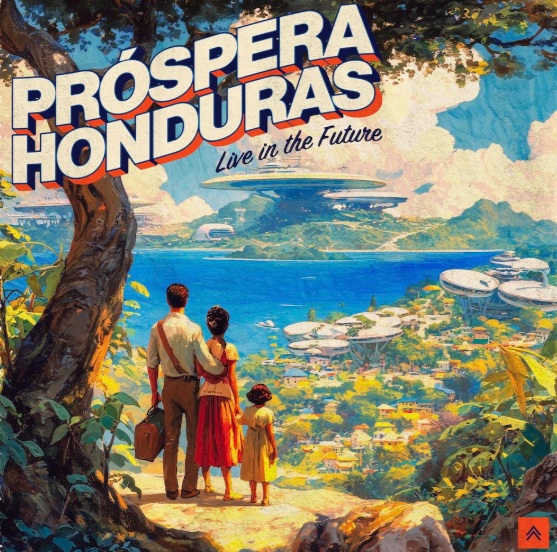
Próspera, officially known as Próspera ZEDE, is a charter city on the island of Roatán, Honduras. It is one of three Zones for Employment and Economic Development (ZEDEs) in the country, operating under a distinct fiscal, legal and regulatory framework that grants it autonomy from the national government. The project is led by Honduras Próspera Inc., which itself is funded by venture capitalists and has a veto vote in Próspera’s governing council. (from Wikipedia)
Prospera is a controversial, privately governed charter city and special economic zone on Roatán island, Honduras, backed by Silicon Valley venture capitalists including Peter Thiel, Marc Andreessen, and Balaji Srinivasan via Pronomos Capital. Aimed at creating a libertarian “startup city” with low taxes and autonomous regulations, it faces intense legal challenges from the Honduran government, which repealed the enabling law. (from Google AI Overview)
“Luxury accommodations, offices, and laboratories were planned for the ZEDE, but one of the selling points of living in Próspera was also that you didn’t have to live there — no more than Próspera’s investors lived in the Cayman Islands, where their fund was registered. Proponents of the start-up society insisted that the twenty-first century city was not made of concrete and glass so much as out of laws. … For what one scholar calls ‘roving capital,’ laws are selected and combined à la carte. The VC firm funding Próspera, for example, was registered in Wyoming. The business itself was registered in Delaware. These jurisdictions were portals to what Oliver Bullough calls Moneyland, where people can select whichever laws ‘are most suited to those wealthy enough to afford them at any moment in time.’ “
— Quinn Slobodian, Crack-Up Capitalism: Market Radicalsand the Dream of a World Without Democracy, pages 195-196
We strive to create welcoming, omni-channel experiences for our global customers.
Our staff of highly trained account managers, solution architects, and technical specialists deliver the end-to-end technology solutions and services today’s organizations and users need to function at their best.
Our global team members are both passionate ambassadors of our clients’ products and services, and visionary technology experts resolute in our pursuit to elevate their end customer journeys, solve business challenges, mitigate risks, and drive continuous innovation.
We’ve deployed millions of emails, motivated countless Facebook likes and shares and generated untold tweets and retweets.
Guided by our Humanity-in-the-loop principles, we take a responsible approach to the transformational technologies we develop and deploy by proactively considering and addressing the broader impacts of our work.
No ghosting. No noise. No irrelevant outreach.
We work diligently to understand your audience and its triggers, develop fit-for-purpose creative, and execute without requiring hand-holding.
We don’t believe in one-size-fits-all—we customize our ascent strategy for each client, but the destination remains the same: the peak of your industry.
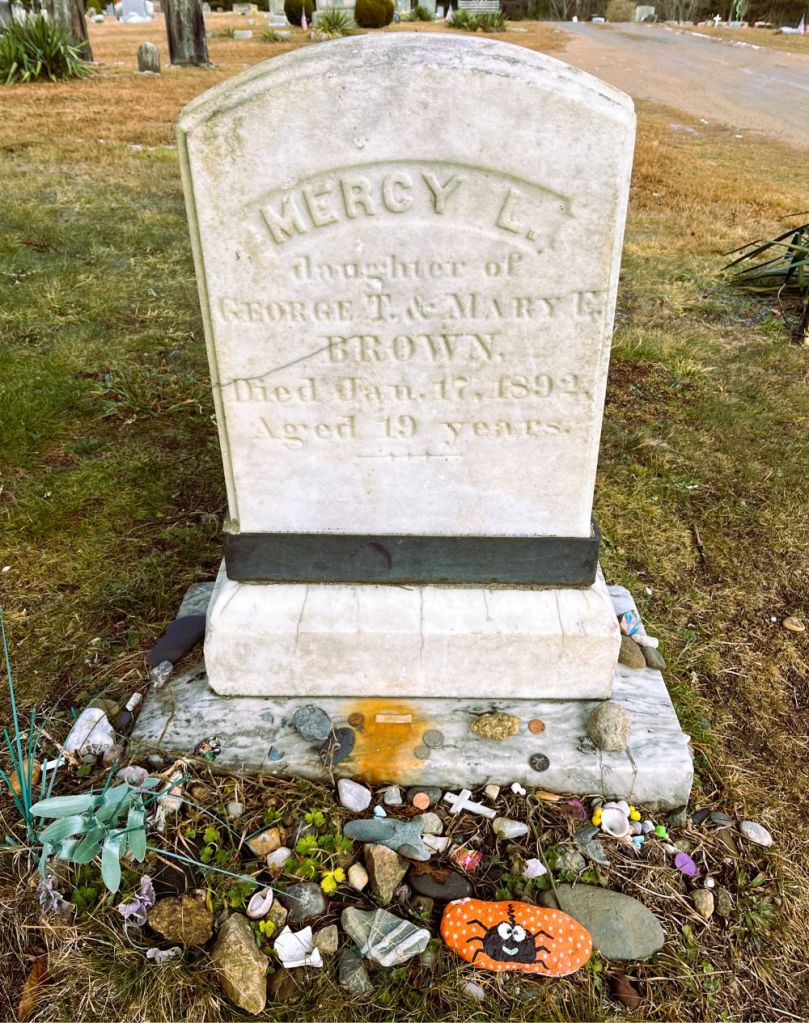
One day, early in January, we drove over to Exeter to visit a grave: Mercy L. Brown, who became infamous after her death from tuberculosis in 1892. Neighbors suspected she was a vampire who was staying alive in her casket by sucking the blood of other family members. This was the theory. They dug her up to check, and because she wasn’t as decomposed as she should have been, they cut out her heart and burned it and fed the ashes to her sick brother. It did not help him. Mercy’s grave is in the cemetery behind Chestnut Hill Baptist Church on Route 102. You walk down a short dirt track, and it’s on the left under some sort of evergreen tree. Her stone is regularly decorated by visitors, just like Jim Morrison’s gravesite in Paris. We found it piled with dozens of pebbles, shells, and coins. The stone itself, a slab of slowly eroding limestone, is bolted into the ground with an iron collar, apparently to prevent anyone from stealing it. One imagines how that might happen. I left a penny. We stopped at the public library, which has a special box placed outside the front door for recycling flags. Then we had lunch down on Nooseneck Road at the Middle of Nowhere Diner, where the baked apples side dish is delicious and highly recommended.
“Already I was considered heterodox if not treasonable, and I was keenly alive to the danger of my position; nevertheless I could not at times refrain from bursting out into suspicious or half-seditious utterances, even among the highest Polygonal and Circular society. When, for example, the question arose about the treatment of those lunatics who said they they had received the power of seeing the insides of things, I would quote the saying of an ancient Circle, who declared that prophets and inspired people are always considered by the majority to be mad; and I could not help occasionally dropping such expressions as ‘the eye that discerns the interiors of all things,’ and ‘the all-seeing land’; once or twice I even let fall the forbidden terms ‘the Third and Fourth Dimensions.'”
“I cherish the notion of the gift economy, that we might back away from the grinding system, which reduces everything to a commodity and leaves most of us bereft of what we really want: a sense of belonging and relationship and purpose and beauty, which can never be commoditized. I want to be part of a system in which wealth means having enough to share, and where the gratification of meeting your family needs is not poisoned by destroying that possibility for someone else. I want to live in a society where the currency of exchange is gratitude and the infinitely renewable resource of kindness, which multiplies every time it it shared rather than depreciating with use.”
— Robin Wall Kimmerer, The Serviceberry, 2025, pages 90-91










































 karen donovan | poetry